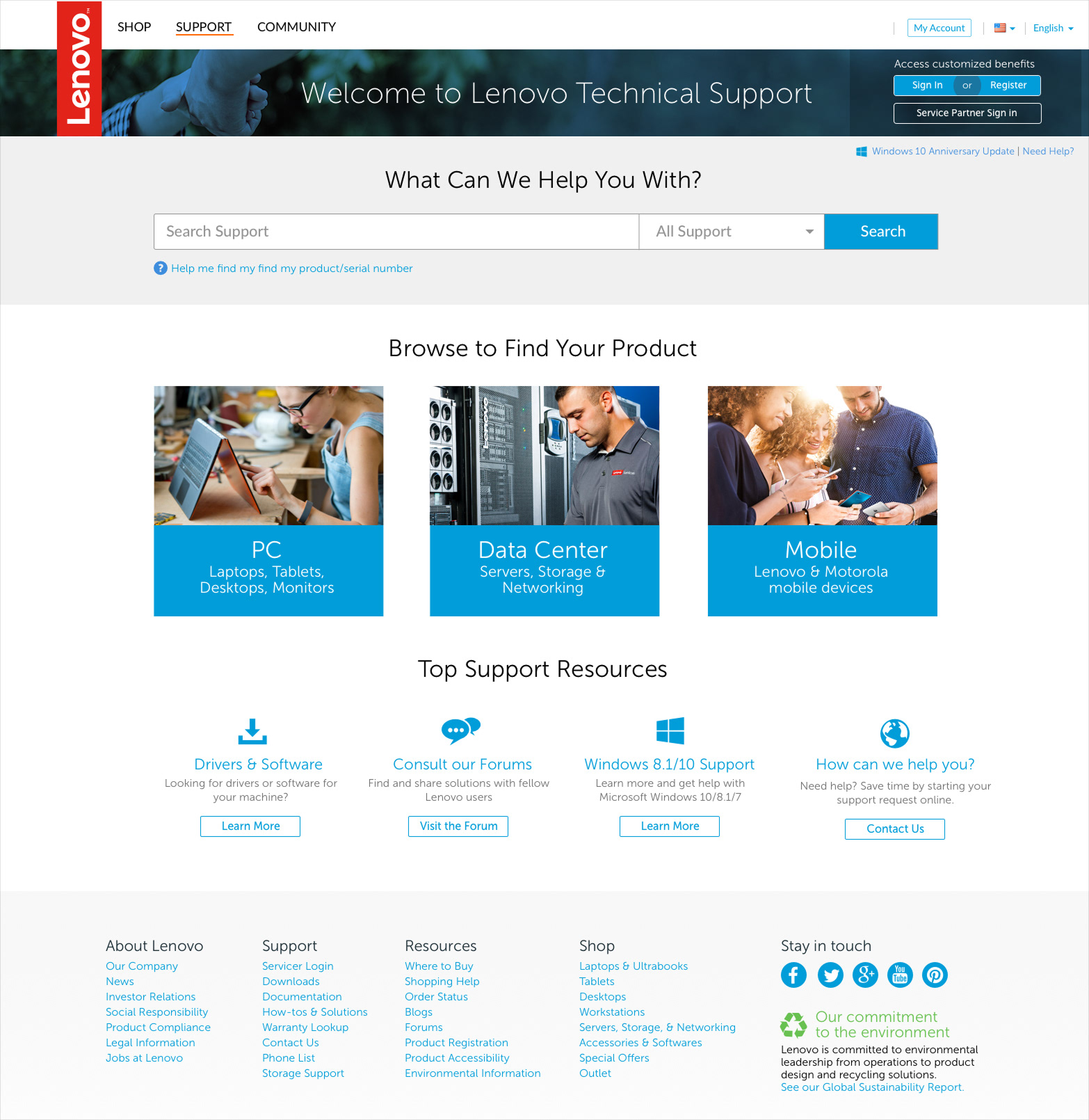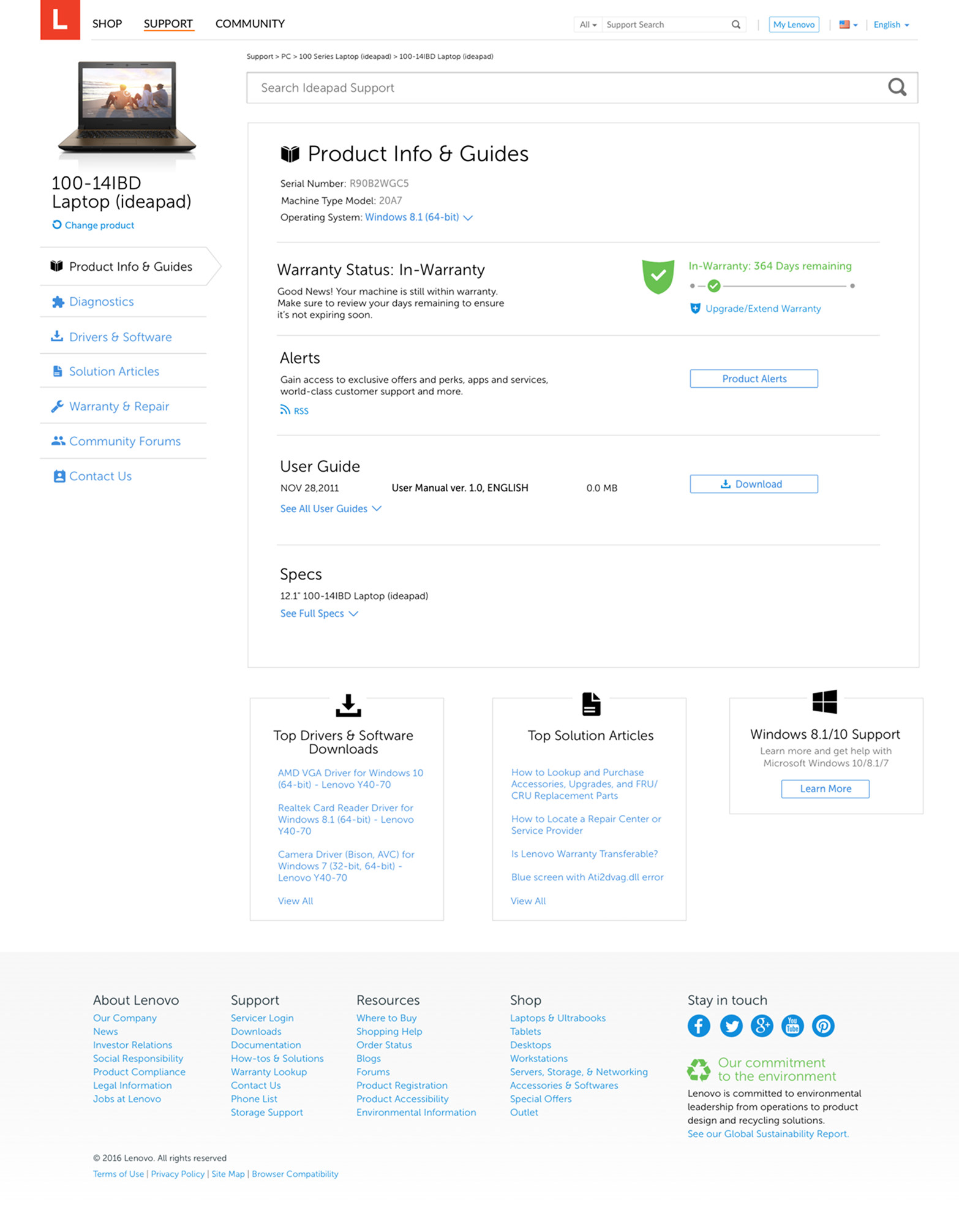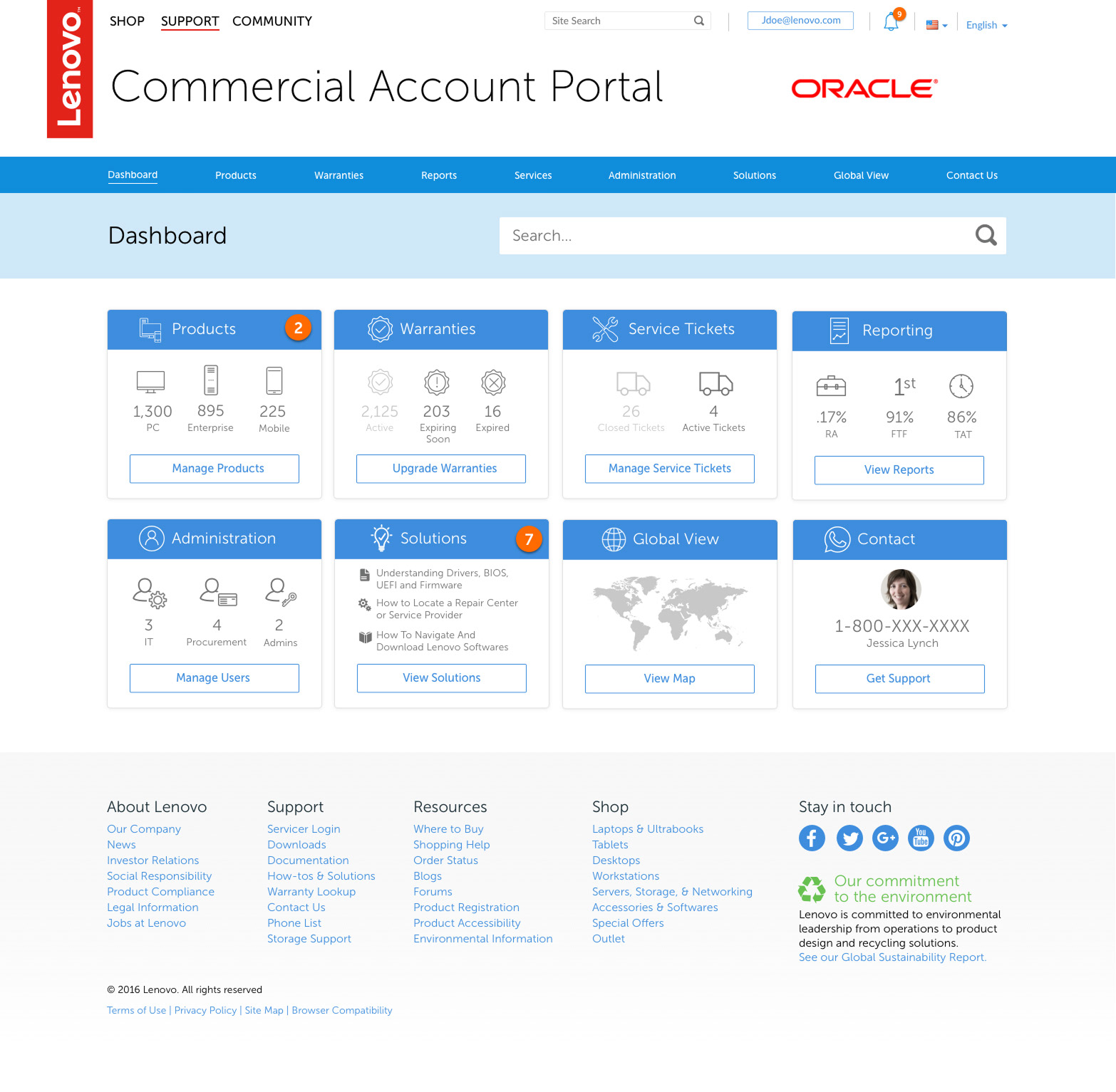
Context Lenovo’s global support ecosystem serves a massive, diverse user base encompassing consumer device owners, enterprise IT administrators, and internal support agents. Managing support operations across this multi-tiered ecosystem required delivering cohesive experiences that met users at their point of need, whether through customer-facing self-service portals or internal agent resolution tools.
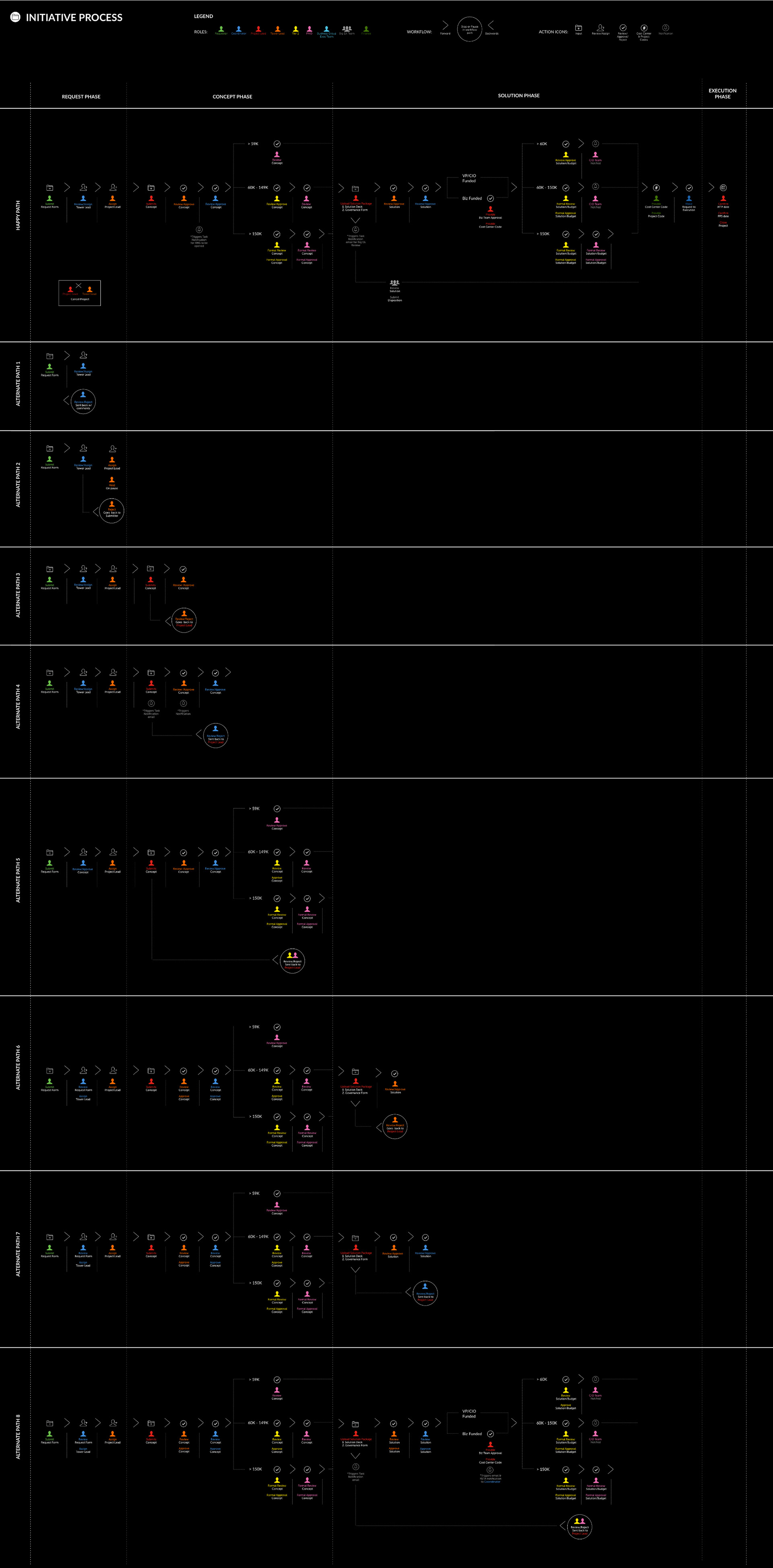
Challenge Users facing hardware and software failures often encountered fragmented diagnostic journeys, unclear escalation paths, and high operational friction, resulting in prolonged downtime and inflated support ticket volumes. The core design challenge centered on untangling these multifaceted support touchpoints and replacing guesswork with scalable, intuitive pathways that empowered users and agents alike to troubleshoot with confidence and efficiency.
Solution To streamline technical remediation across the support lifecycle, end-to-end service journeys were unified by surfacing intuitive troubleshooting trees, transparent hardware diagnostic tools, and contextual remediation steps directly within the digital footprint. Both customer-facing platforms and internal tooling were restructured to prioritize immediate, low-effort solutions—transforming high-friction support barriers into clear, guided pathways that accelerated resolution time and elevated overall customer satisfaction.
Technical Rigor Interaction patterns were validated through data-driven methodologies, combining quantitative A/B experimentation with qualitative behavioral analytics via FullStory. Session analyses, heatmaps, and drop-off data were cross-referenced against split-test performance metrics to isolate user friction, substantiate architectural choices, and justify design iterations with empirical evidence rather than subjective preference.